6 Benefits of Infant Physical Therapy

Written by
Kathleen Frost
Published
Every baby develops at their own pace, but sometimes a little extra support can make all the difference. Infant physical therapy helps babies build strength, coordination, and confidence as they learn to roll, sit, crawl, and walk.
Whether your child is born prematurely, has muscle tightness, or is simply taking longer to reach certain developmental milestones, early intervention can gently guide them toward healthy movement.
Understanding Infant Physical Therapy
Infant physical therapy, or pediatric physical therapy, helps newborns, premature babies, or infants develop motor skills for everyday movement. Some of these key milestones include their first steps, holding up their heads, and sitting properly.
Unlike other pediatric therapies that focus on speech, sensory processing, or behavioral development, infant physical therapy specifically targets movement, strength, and motor skill development to support a baby’s physical growth and mobility, says Nora Bachman, DPT, owner of Nora B, PT in Los Angeles, CA.
When Do Infants Need Physical Therapy?
Now you know why proper motor skills and behaviors are paramount to healthy development; so, it’s necessary to understand when physical therapy is the answer. Dr. Bachman says generally, infants need physical therapy when they show signs of delayed motor skills, muscle weakness, stiffness, or favoring one side of the body. Some conditions that cause these problems in infants and newborns include:
Torticollis
Plagiocephaly
Premature birth
Cerebral palsy
Asymmetrical movement patterns
Brachial plexus injury
Clubfoot or congenital limb differences
Down syndrome
What to Expect During Infant Physical Therapy Sessions
No two physical therapy sessions for infants are exactly the same. However, Dr. Bachman says therapists generally follow a similar flow:
Perform a full-body assessment. Your physical therapist evaluates your baby’s muscle tone, flexibility, strength, and movement patterns to identify any areas of concern. They’ll also ask you about your baby’s medical history if they’re an older baby.
Establish a connection with the baby and parent. Building trust with parents is key, no matter the type of pediatric therapy. Dr. Bachman says she gets the babies used to touch before moving further.
Create a treatment plan. Based on their assessment, the therapist develops a customized plan with specific goals and exercises to support your baby’s developmental needs. For example, Dr. Bachman says if your baby’s head and neck are tight, the plan might involve gentle relaxation techniques.
Teach parents therapy techniques for at-home use. “We do the exercises first together,” Dr. Bachman explains. Then, after showing them the exercises in person, she provides videos for parents to watch at home and keeps a line of communication open for any questions to reinforce progress between sessions.
How many physical therapy sessions will my infant need?
The number of physical therapy sessions your baby needs depends on their individual condition, developmental goals, and progress over time.
Dr. Bachman says some infants may only require a few weeks of therapy to address mild issues, while others with more complex developmental problems will need multiple sessions.
When to Talk to a Pediatrician & Ask for a PT Referral
Many parents might not realize how accessible physical therapy is for their infants and newborns. Dr. Bachman says parents should talk to a pediatrician about infant physical therapy right away “if something seems off.”
She outlines signs of asymmetry that often go unnoticed but warrant a visit:
One leg being higher than the other
Looking like a banana
Issues with breastfeeding and other tension
Legs at different heights
A funky crawl
How to get started with pediatric physical therapy
If you’re considering infant physical therapy, Village makes it easy to find vetted, licensed pediatric specialists who offer both in-home, in-clinic, and virtual care. Start by booking a free consultation to discuss your baby’s developmental needs and get matched with a therapist who can help them thrive.
Benefits of Infant Physical Therapy
Research shows that infant physical therapy offers many benefits for a baby’s growth, development, and well-being. Dr. Bachman says physical therapy for infants and newborns can:
1. Promotes Healthy Motor Skills Development
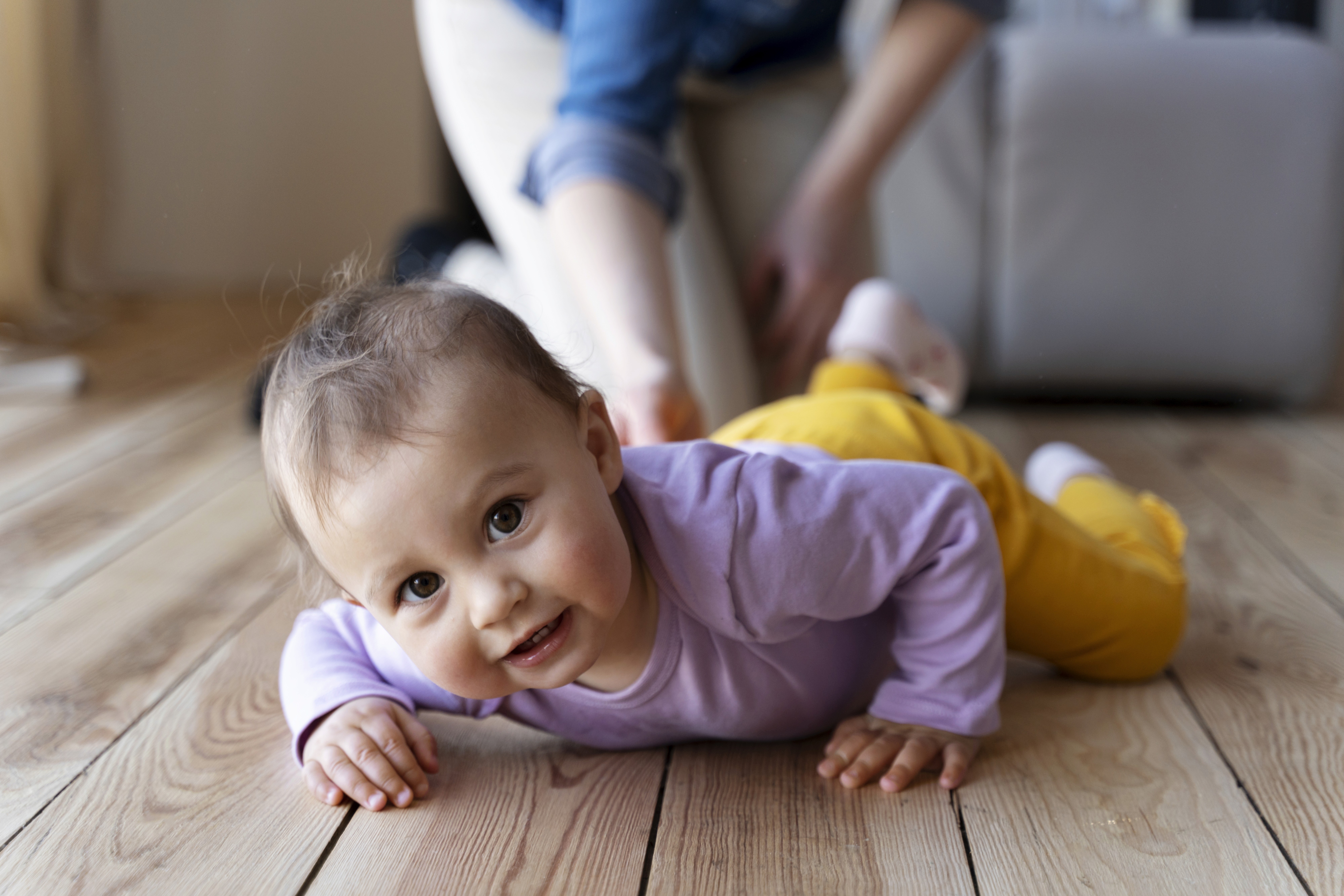
Infant physical therapy helps babies reach important milestones like rolling, sitting, crawling, and walking. Dr. Bachman says pediatric PTs use targeted exercises to strengthen muscles and improve coordination.
Catching development issues early ensures your baby moves properly at specific stages. Supporting motor skills from the start sets a strong foundation for future physical activity.
2. Builds Strength, Flexibility, and Core Stability
Therapy activities focus on strengthening the neck, core, hands, and feet while making them more flexible. These improvements help babies move safely and confidently in their environment.
In general, stronger muscles also support posture, endurance, and overall physical growth. “Gentle techniques are the key to reducing tightness,” Dr. Bachman says. Parents often notice their baby moving more freely and enjoying playtime again.
3. Enhances Balance, Coordination, and Body Awareness
Physical therapy encourages balance, spatial awareness, and controlled movement. Babies learn how to shift weight, stabilize their bodies, and coordinate limbs for everyday activities.
Improved coordination supports independent mobility and helps prevent falls or awkward movements.
4. Prevents Developmental Delays
Early intervention can correct developmental issues from conditions like torticollis, low muscle tone from cerebral palsy, or challenges from prematurity can be managed with targeted exercises.
Tackling these developmental issues early increases the likelihood of long-term success and reduces the need for more intensive interventions later.
The Support Your Child Needs—
Without the Wait
Expert pediatric therapy coordinated for your family in Los Angeles, Orange County, and San Diego.

5. Supports Cognitive and Social Development
Physical activity during therapy is closely linked to cognitive and social growth.
Guided exercises and play help babies develop problem-solving skills, focus, and healthy interactions with parents and caregivers.
6. Empowers Parents with Tools and Guidance
Infant physical therapy heavily involves parents. Dr. Bachman says she first performs exercises with parents in the clinic, then provides them with videos and online instructions.
Showing parents what to do gives them confidence and allows them to track their child’s progress. This collaboration builds trust and helps progress continue between visits.
FAQs About Infant Physical Therapy
Is physical therapy safe for newborns?
“Physical therapy is okay right away,” Dr. Bachman says. “Getting them used to touch is the most important.” She adds that babies in the NICU can even get physical therapy. Sessions use gentle, age-appropriate movements and positioning to support healthy development without causing pain or stress.
Does insurance cover physical therapy?
Most insurance plans cover medically necessary physical therapy with a referral or prescription from your pediatrician. However, Dr. Bachman says this varies by your state and insurance company.
Can parents do infant physical therapy at home or virtually?
Yes. Dr. Bachman says many pediatric physical therapists offer virtual sessions and at-home guides. These appointments allow parents to receive live coaching and feedback from home, making care more flexible and accessible.
Do parents need any special equipment for physical therapy at home?
Most therapy activities can be done using common household items like play mats, toys, or towels. Your therapist will show you how to adapt your space for safe, engaging practice between sessions.
What if my infant doesn’t like tummy time or other fundamental movements?
Many babies resist tummy time at first, but an infant physical therapist can suggest gentle, fun ways to encourage movement. Adjusting their position and incorporating play can make exercises more comfortable and enjoyable for your baby.